Showing posts with label vintage brooch. Show all posts

Tuesday, 28 October 2014

FEATURE: Scissors


Rhinestone Scissors!  This one is sold! Yep, bought out before it was listed! 
However, just wanted to share it with all you vintage jewelry lovers~ 


Tuesday, 21 October 2014

FEATURE: Vintage Lilly Brooch


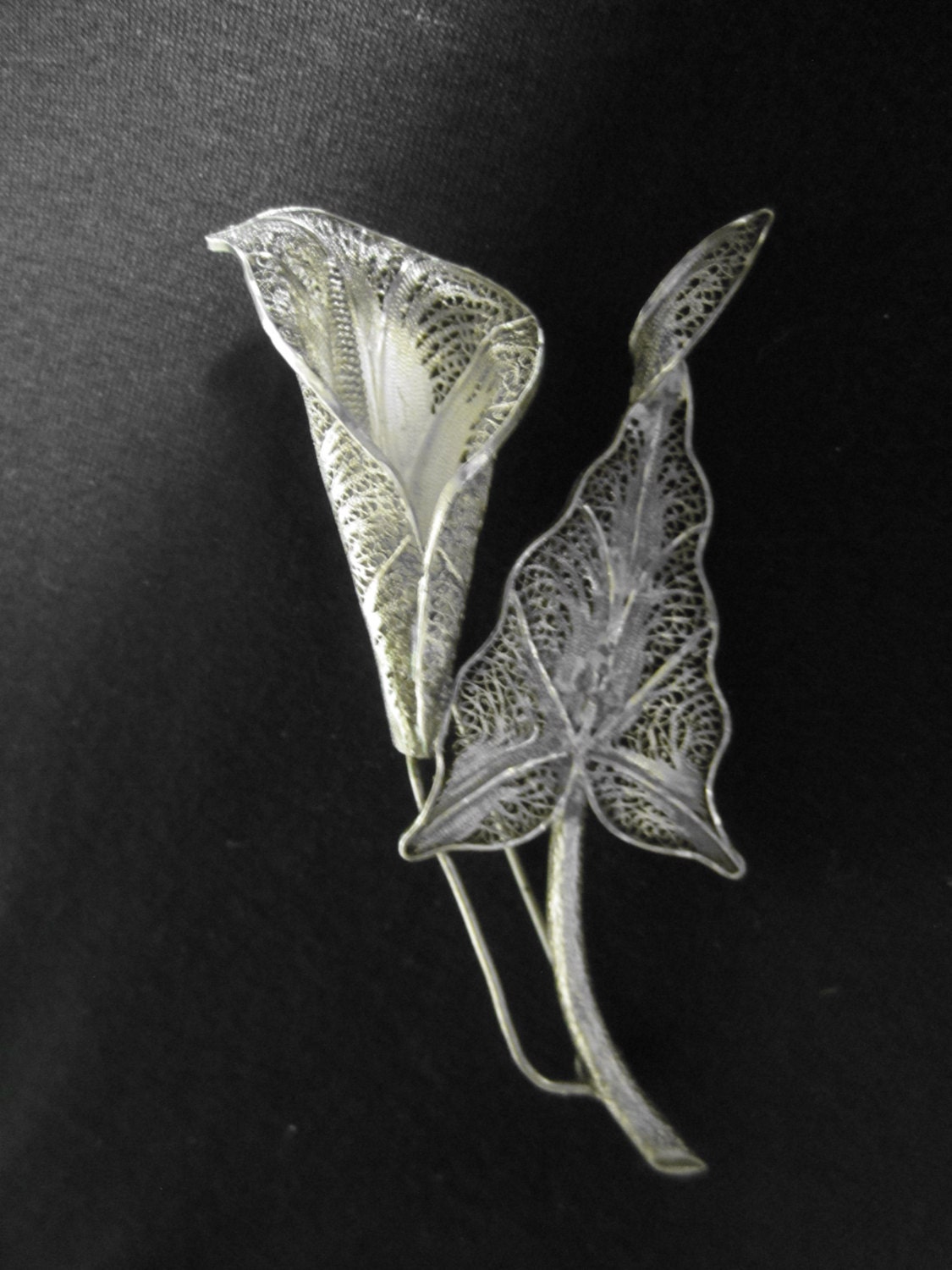
Lovely Lilly Brooch, this one is an interesting one.  
If any one recognizes this make or type, I would be glad to hear from you!


Tuesday, 14 October 2014

FEATURE: Pretty as a Butterfly or two ....Vintage Scatter Pins


May the wings of the butterfly kiss the sun
And find your shoulder to light on,
To bring you luck, happiness and riches
Today, tomorrow and beyond.
~Irish Blessing

Scatter pins a woman's small ornamental pin, usually worn with other similar pins on a dress, suit jacket.  ~ Dictionary.com


Thursday, 9 October 2014

MY STYLE: Black & White & silver - Just one of those Days, Stay Cozy & Warm

I love, love this one! Ah! a few of my favs and how comforable it this? Totally!
I love the rubber boots from Nordstrom, 
Old Navy for the skinny Jeans & White shirt, & socks
I can't find a sorce for this white cardigan, but I love it. 
Ardene's for the scarf 
And whala ~ L'Amour D'Antique for the vintage stainless ring & lilly brooch


Tuesday, 30 September 2014

FEATURED: Marcasite Brooch


What is Marcasite?

Here is Wikipedia's Answer: 
"The mineral marcasite, sometimes called white iron pyrite
is iron sulfide (FeS2) with orthorhombic crystal structure. (different from pyrite.)"

However, marcasite is not typically used in jewelry.  Here is wiki on the matter:

"Marcasite jewelry is jewelry made from pyrite (fool's gold), not, as the name suggests, from marcasite.[1] Pyrite is similar to marcasite, but more stable and less brittle. Marcasite jewellery has been made since the time of the Ancient Greeks.[2] It was particularly popular in the eighteenth century, the Victorian eraand with Art Nouveau jewellery designers.[2][3] It is frequently made by setting small pieces of pyrite into silver.[3] Cheaper costume jewelry is made by glueing pieces of pyrite rather than setting.[2] A similar-looking type of jewellery can be made from small pieces of cut steel.[1][2]"


Tuesday, 23 September 2014

FEATURED: Marcel Boucher Brouch Set

"Wikipedia  states that "Marcel Boucher (1898–1965) was a French jeweller. In the early 1920s, he moved to New York City where he developed a passion for jewellery design, studying under Pierre Cartier as an apprentice.[1] By the 1930s, he was working for Mazer Brothers. However, in 1937 he decided to establish his own company, which he called Marcel Boucher and Cie."
Illusion Jewels states "  Mark:   LeC      with number   -- short for "Le Couturier" rare mark for high end line of Canadian made Marcel Boucher jewelry. Photos and information courtesy Sheryl Hamilton from research of Terri DeLany."


Both the brooch and earrings has the LeC marking. :)


Tuesday, 2 September 2014

FEATURED: The Royal Scots


Wikipedia has so many interesting details to say about the Royal Scots, I enjoyed reading these and thought perhaps you might also.  For more pictures view here.

"The Royal Scots (The Royal Regiment), once known as the Royal Regiment of Foot, was the oldest, and therefore most senior, infantryregiment of the line in the British Army, having been raised in 1633 during the reign of Charles I of Scotland. The regiment existed until 2006, when it amalgamated with the King's Own Scottish Borderers to become the Royal Scots Borderers, 1st Battalion of the newly formed Royal Regiment of Scotland. ....

Nicknames[edit]

Their nickname as Pontius Pilate's bodyguard, originated from a 17th-century boasting contest with the French Regiment of Picardy, who boasted that prior to the Resurrection Christ's tomb was guarded by the French regiment. Both claims are, of course, baseless.
The Royal Scots were also known as "First of foot, right of the line and the pride of the British army". The 9th (Territorial) Battalion (later after amalgamation with the 7th Battalion, known as the 7th/9th Battalion) was known as "The Dandy Ninth", being the only kilted battalion of this lowland regiment which was originally formed from highlanders who emigrated to the Edinburgh area.
The 9th were originally one of the Queen's Edinburgh Rifles volunteer battalions. The 2nd Battalion was sardonically referred to as "The First to Foot It" during the Battle of Hong Kong.[50]"